
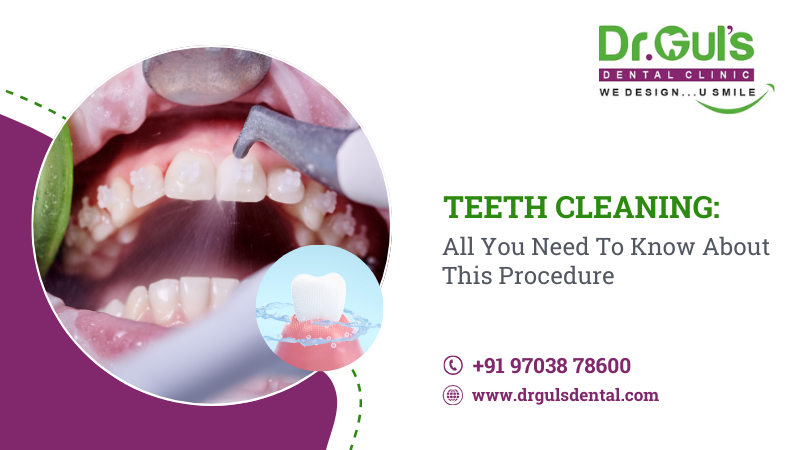
Teeth cleaning is one of those dental procedures everyone knows they should do, but many people still postpone. Life gets busy, there’s no pain, and brushing twice a day feels “good enough.” Until one day, bleeding gums, bad breath, or sensitivity show up, and suddenly, teeth cleaning becomes urgent, not optional.
Patients visiting Dr. Gul’s Dental Clinic often say the same thing: “I didn’t think I needed it until my dentist explained what was actually happening under the gums.” That’s exactly why understanding teeth cleaning properly matters. It’s not just about shiny teeth, it’s about preventing problems before they become expensive or painful.
In this blog, we’ll see what teeth cleaning really is, why it’s important, what happens during the procedure, who needs it, how often it’s required, and a simple explanation of teeth cleaning cost in Noida.
What Is Teeth Cleaning?
Teeth cleaning, also known as professional dental cleaning or scaling and polishing, is a preventive dental procedure. It removes plaque, tartar (hardened plaque), and stains that regular brushing cannot remove.
Even with excellent oral hygiene at home, plaque builds up in areas that toothbrushes and floss can’t fully reach, especially near the gum line and between teeth. Over time, this plaque hardens into tartar, which only a dentist can remove.
Teeth cleaning focuses on:
- Keeping gums healthy
- Preventing cavities
- Reducing bad breath
- Protecting bone and tooth support
Importance of Regular Teeth Cleaning
Regular teeth cleaning helps:
- Prevent gum disease
- Reduce tooth decay
- Improve breath freshness
- Maintain natural tooth color
- Protect long-term oral health
- Lower future dental costs
It’s one of the most cost-effective dental treatments available.
Types of Teeth Cleaning Procedures
Dentists choose the type of cleaning based on your gum health, plaque buildup, and overall oral condition. Here are the most common types explained in simple terms:
- Routine Dental Cleaning (Scaling & Polishing)
This is the most common type of teeth cleaning. It removes plaque, tartar, and surface stains from the teeth and along the gum line. It is recommended every six months for people with healthy gums and helps prevent cavities and gum disease. - Deep Cleaning (Scaling and Root Planing)
Deep cleaning is advised when there is gum disease or heavy tartar buildup below the gum line. It cleans the roots of the teeth and helps the gums reattach properly. This procedure may be done in multiple visits and sometimes requires mild numbing. - Periodontal Maintenance Cleaning
This type of cleaning is for patients who have had gum disease treatment before. It helps maintain gum health by regularly removing bacteria from deeper gum pockets and prevents the condition from worsening again. - Gross Debridement Cleaning
When there is excessive plaque and tartar that makes it difficult to examine the teeth, dentists perform gross debridement first. It clears heavy buildup, so a proper evaluation and detailed cleaning can be done later. - Air Polishing
Air polishing uses a jet of air, water, and fine powder to remove surface stains caused by coffee, tea, or smoking. It is gentle and often used along with routine cleaning for cosmetic improvement.
Each type serves a specific purpose, and your dentist will recommend the most suitable option after examining your teeth and gums.
Teeth Cleaning vs Deep Cleaning: What’s the Difference?
- For healthy gums
- Preventive care
- Done every 6 months
Deep Cleaning (Scaling and Root Planing):
- For gum disease
- Cleans deeper pockets
- May require multiple visits
Your dentist decides based on the gum condition.
What Happens During a Teeth Cleaning Procedure?
At Dr. Gul’s Dental Clinic, teeth cleaning is gentle, structured, and tailored to your oral health condition.
Step 1: Oral Examination
The dentist examines your teeth and gums to check for inflammation, tartar buildup, or sensitivity.
Step 2: Scaling
Special instruments or ultrasonic scalers remove plaque and tartar from teeth and below the gum line. You may feel vibration or mild pressure, but it should not be painful.
Step 3: Polishing
After scaling, teeth are polished using a special paste to smooth the surface and remove surface stains.
Step 4: Final Rinse and Guidance
The dentist rinses your mouth and gives advice on oral hygiene, brushing techniques, and follow-up care.
The entire procedure usually takes 30–45 minutes, depending on buildup.
What to Do After Teeth Cleaning?
After cleaning:
- Avoid very hot or cold food for a few hours
- Brush gently the same day
- Maintain regular oral hygiene
- Follow dentist’s instructions
Any mild sensitivity usually resolves quickly.
Common Myths About Teeth Cleaning
“Cleaning weakens teeth.”
False. It strengthens oral health by removing harmful bacteria.
“My teeth are white, so I don’t need cleaning.”
Even white teeth can hide tartar below the gums.
“It causes gaps between teeth.”
Cleaning reveals existing gaps, it doesn’t create them.
Teeth Cleaning Cost in Noida: What to Expect
The cost of teeth cleaning in Noida depends on several factors:
- Amount of plaque and tartar
- Gum health condition
- Type of cleaning required
Basic cleaning usually costs less, while deep cleaning may cost more due to the time and complexity involved. While prices vary, teeth cleaning remains one of the most affordable dental procedures compared to fillings, root canals, or crowns.
At Dr. Gul’s Dental Clinic, patients receive transparent guidance on teeth cleaning cost in Noida and treatment needs before the procedure begins.
Why Delaying Teeth Cleaning Can Cost More Later?
Skipping regular cleaning may lead to:
- Gum disease
- Tooth mobility
- Bad breath
- Costly restorative treatments
Preventive care always costs less than corrective treatment.
FAQs
Q1. What is the connection between teeth cleaning and gum health?
Plaque buildup causes gum inflammation. If left untreated, it leads to gingivitis and eventually periodontitis. Teeth cleaning removes the bacteria causing inflammation, allowing gums to heal and tighten around teeth again.
Q2. Can teeth cleaning cure bad breath?
In many cases, yes. Bad breath often results from plaque and bacterial buildup on teeth and gums. Teeth cleaning removes these odor-causing bacteria and significantly improves breath freshness. Persistent bad breath may need further evaluation.
Q3. Is teeth cleaning safe for sensitive teeth?
Yes, teeth cleaning is safe even for sensitive teeth when performed correctly. Dentists adjust techniques and tools based on sensitivity levels. Any temporary sensitivity usually subsides within a day or two. Informing your dentist beforehand helps ensure extra comfort.
A Simple Habit That Protects Your Smile for Years
Teeth cleaning may seem simple, but its impact is powerful. It protects your gums, preserves your teeth, prevents disease, and saves money in the long run. Understanding the procedure and the teeth cleaning cost in Noida helps you make informed decisions, and not rushed ones.
At Dr. Gul’s Dental Clinic, preventive care is always prioritised, because protecting your smile early is far easier than treating problems later, and your oral health truly deserves that attention.