
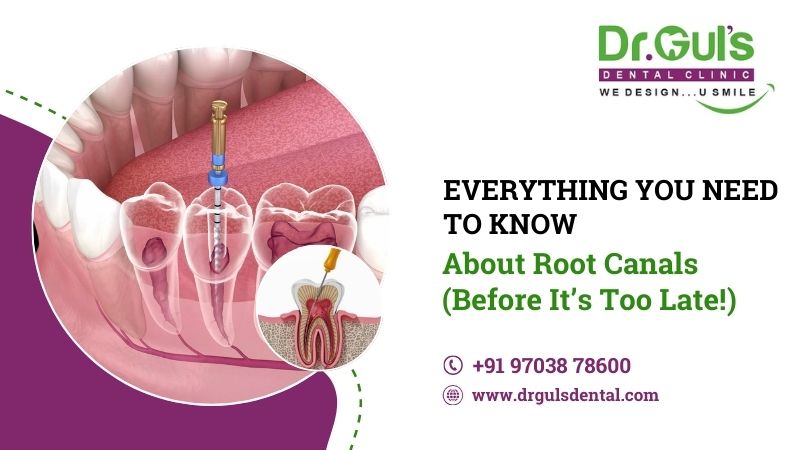
The words “root canal” can instantly make anyone nervous. Many people delay treatment because they fear pain, cost, or complicated procedures. But here’s the truth: most root canals are done to relieve pain, not cause it. If you’re experiencing tooth pain or have been advised to get a root canal treatment in Noida, Dr. Guls dental clinic will clear your doubts. Understanding the process early can save your tooth and your money.
What Exactly Is a Root Canal?
Inside every tooth is a soft tissue called the pulp, which contains nerves and blood vessels. When this pulp gets infected due to deep decay, cracks, or injury, it can cause severe pain and swelling. A root canal procedure is designed to:
- Remove the infected pulp
- Clean and disinfect the inner canals
- Seal the tooth to prevent further infection
Instead of removing the entire tooth, a root canal helps save your natural tooth.
When Do You Need a Root Canal?
One of the most common questions patients ask is: When do you need a root canal? You may need one if you notice:
- Severe tooth pain while chewing
- Sensitivity to hot or cold that lingers
- Swollen or tender gums
- Darkening of the tooth
- A small pimple-like bump on the gums
- Deep cavities reaching the nerve
Sometimes, there are no obvious symptoms, which is why regular dental check-ups are important. At Dr. Guls Dental Clinic, we use advanced diagnostics to detect infections early before they become serious.
What Happens During a Root Canal Procedure?
Many people imagine it to be complicated, but modern dentistry has made it simple and comfortable. Here’s what typically happens during a root canal treatment in Noida:
- Examination & X-Ray The dentist examines the tooth and takes an X-ray to assess the infection.
- Local Anesthesia The area is numbed completely. You should not feel pain during the procedure.
- Cleaning the Infection The infected pulp is removed carefully, and the canals are cleaned and shaped.
- Filling the Canal The cleaned canals are filled with a special material to seal them.
- Crown Placement A dental crown is placed to strengthen the treated tooth.
The procedure usually takes 1–2 sittings, depending on the severity of the infection.
Is Root Canal Painful?
This is probably the biggest myth. Modern root canal treatment is no more painful than getting a filling. In fact, it removes the infection that is causing pain in the first place. You may feel mild discomfort after the procedure for a few days, but it is manageable with prescribed medication. At Dr. Guls Dental Clinic, we focus on making the procedure as comfortable as possible using advanced techniques and gentle care.
What Happens If You Delay a Root Canal?
Ignoring the need for a root canal can lead to:
- Severe infection spreading to the jaw
- Swelling of the face and gums
- Bone loss around the tooth
- Tooth extraction
- Higher treatment cost later
A simple root canal today can prevent complicated surgery tomorrow.
Cost of Root Canal Treatment
The root canal treatment cost depends on:
- Which tooth is affected (front or molar)
- Severity of infection
- Need for crown placement
- Number of sittings required
Molar teeth usually cost more because they have multiple canals. While some people hesitate because of cost, delaying treatment often leads to tooth extraction and implant placement, which is far more expensive. At Dr. Guls Dental Clinic in Noida, we offer transparent pricing and personalized treatment planning.
Root Canal vs Tooth Extraction: Which Is Better?
Many patients ask if extraction is easier. While extraction removes the infected tooth, it creates a gap that may require:
- Dental implant
- Dental bridge
- Denture
Saving your natural tooth with a root canal is usually the better option whenever possible. Natural teeth:
- Maintain jawbone health
- Preserve proper bite alignment
- Prevent shifting of surrounding teeth
How Long Does a Root Canal Last?
With proper care and a good-quality crown, a root canal-treated tooth can last 10–20 years or even a lifetime. To maintain longevity:
- Brush twice daily
- Floss regularly
- Avoid chewing very hard objects
- Visit your dentist for regular check-ups
Signs Your Root Canal Was Successful
After treatment, you should notice:
- Relief from severe pain
- Reduced swelling
- Improved chewing comfort
- No further infection
If you experience persistent pain or swelling weeks after the procedure, contact your dentist immediately.
How to Prevent Needing a Root Canal?
Prevention is always better than treatment. You can reduce the chances of needing root canal treatment by:
- Maintaining good oral hygiene
- Treating cavities early
- Avoiding excessive sugary foods
- Wearing a mouthguard during sports
- Scheduling regular dental check-ups
Small fillings today can prevent big procedures tomorrow.
Why Choose Dr. Gul’s Dental Clinic for Root Canal Treatment?
Selecting the right dentist is crucial for your dental health, especially when it comes to painless root canal treatment. At Dr. Guls Dental Clinic, we specialize in providing a comfortable and stress-free experience for our patients. Here’s why you should choose us for your root canal treatment:
- Advanced Diagnostic Tools: We use the latest technology to precisely diagnose and plan your treatment, ensuring the best results.
- Gentle, Painless Root Canal Procedures: Our expert team prioritizes your comfort, utilizing advanced techniques to ensure a virtually pain-free experience.
- Experienced & Caring Professionals: Our skilled dentists have years of experience in performing root canal treatments with the utmost care and precision.
- Patient-Centered Approach: We tailor each treatment plan to suit your needs, ensuring you’re always at ease throughout the process.
- Clear, Transparent Treatment Plans: We provide you with detailed information about the treatment, ensuring you’re fully informed every step of the way.
At Dr. Guls Dental Clinic, our goal is simple: to save your natural tooth with painless RCT, giving you a healthier smile.
Don’t Wait Until It’s Too Late
A root canal is not something to fear, it’s something to appreciate. It saves your tooth, relieves pain, and protects your overall oral health. If you are experiencing tooth pain or have been advised to get a root canal treatment in Noida, don’t delay. Early treatment means less pain, lower cost, and better results. Your smile deserves timely care. If you suspect you may need a root canal or want a second opinion, visit Dr. Guls Dental Clinic in Noida for a professional evaluation. Because when it comes to dental health, waiting is rarely the best option.
FAQs
Q1. Can you eat after a root canal?
Yes, you can eat after a root canal treatment, but it’s best to wait until the numbness from anesthesia completely wears off to avoid accidentally biting your cheek or tongue. For the first few days, stick to soft foods like khichdi, curd, soups, or mashed vegetables, and avoid chewing on the treated side.
Q2. Is root canal pain worse than tooth pain?
No. In fact, root canal treatment is done to relieve the pain caused by infection. With modern anesthesia and advanced techniques, the procedure is usually comfortable and much less painful than the infection itself.
Q3. Can I avoid a root canal if I take antibiotics?
No, if your tooth has been infected, it cannot be cured with any medications. Antibiotics may temporarily reduce the pain, but they do not remove the infected pulp inside the tooth. Without proper root canal treatment, the infection can return and become more serious.